Scaling Firm Growth Via Strategic Automation Tools

A shared metrics layer lowers debate about numbers and shifts attention back to decisions. Reputable data pipelines and governance: Quality checks, access controls, and clear accountability avoid downstream failures.
Near-real-time control panels matter most when financial or organization leaders need to make regular choices relating to sales, operations, and customer assistance. How will you determine if your data structure is strong? Time to produce management reports. Precision and consistency of essential metrics. Data quality ratings. Time needed to answer typical business concerns.
These spaces increase exposure while including friction for workers and consumers. Identity and access management: Single sign-on,, and role-based gain access to minimize both breach danger and optimize how data is accessed and managed within the company.
Planning Toward the 2026 Digital Transformation Landscape
Clear incident action shortens action times when problems occur. Security ingrained in shipment: Integrating security checks into advancement pipelines, such as code scanning and dependence checks, prevents problems from reaching production and lowers rework later. How to understand if your security steps are up-to-date: Mean time to discover and react to incidents.
Concern 5: Delivery engine (DevOps and platform) to increase every team's output As soon as customer courses, combinations, information, and security are moving in the ideal instructions, the restricting factor typically ends up being delivery capacity. Groups know what to develop, but releasing modifications is slow, dangerous, or pricey.
Improving the delivery engine is less about tools and more about consistency. Constant integration and shipment: Automated screening, managed release processes, and clear governance reduce modification failure while increasing release frequency. This balance is central to sustained improvement. Observability and efficiency discipline: Logs, metrics, and tracing provide early caution when systems break down.
Cloud cost controls: practices connect usage to organization value. CEOs and other service executives require to comprehend that - Changing core systems before fixing client journeys or doing system combinations frequently results in higher expenses with little visible gain.
Purchasing numerous tools to fix a single workflow fragments information, increases training costs, and slows adoption. The companies that prosper are selective, patient, and specific about what comes first and why.
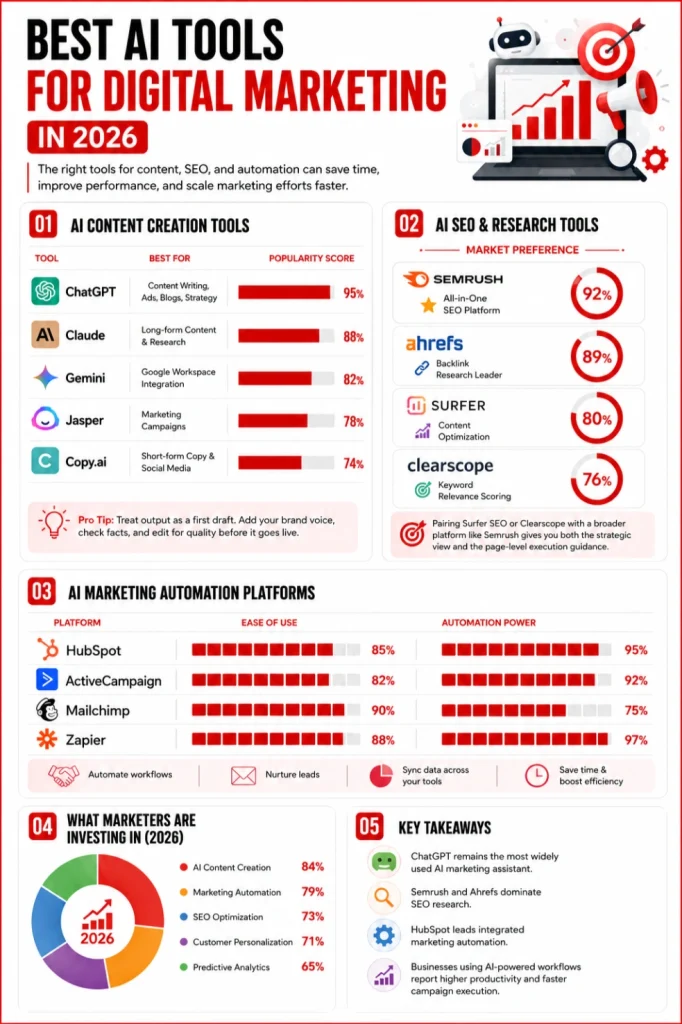
Can AI Boost Results for Digital Marketing Agencies?
A clear time-bound roadmap assists management teams move from intent to execution without overloading the organization. They identify a small set of operational processes with the highest manual effort or error rates.
Just the leading one or 2 progress. 3090 days: Provide fast ROI: The goal here shows up effect. Basic identity controls, such as single sign-on and multi-factor authentication, are executed along with recognition of backups and recovery plans. Arise from this window develop confidence and complimentary up resources for the next stage.
Information models are updated, and a shared KPI layer is defined. Security checks are embedded into advancement workflows so risk does not come back as company operations become faster.
Specific components are upgraded or changed as needed. Unused tools are removed, costs are decreased, and modifications roll out without interrupting daily operations.
Digital improvement in 2026 rewards accuracy. Get in touch with Capital Numbers' expert group of service analysts to help you speed up faster towards digital transformation.
Why Cloud Platforms Redefine Digital Transformation in 2026
Skills spaces in vital locations like AI, artificial intelligence and cybersecurity now impact nearly 9 in 10 organizations, affecting not simply IT but every function throughout the enterprise. Digital tools like AI, low-code/no-code platforms and advanced analytics have become ingrained in daily workflows, and all workers should be geared up with the right abilities to drive performance and innovation.
Along with these efforts, 46% of organizations are actively upgrading standard procedure to incorporate brand-new digital technologies, ensuring that procedures progress in step with innovation. Only about a quarter are prioritizing modification management methods as part of their change agenda. This minimal focus on change management raises issues as it may leave organizations susceptible to staff member resistance, misalignment and engagement difficulties that can weaken digital initiatives.
Comprehensive plans, consisting of senior leadership buy-in, clear interaction, targeted training and stakeholder engagement, are vital for aligning groups with change goals and fostering a culture of versatility and continuous enhancement. In 2026, technology adoption continues to be a tactical chauffeur of digital transformation, with companies leveraging digital platforms to improve dexterity, scalability and development.
These technologies are not just widely carried out however likewise actively updated and refined by 17% to 18% of organizations, underscoring their central function in supporting smooth operations, hybrid work models and fast advancement cycles. Software application as a service (SaaS) and mobile web technologies show strong adoption, incorporated by 42% and 39% of companies, respectively, throughout numerous company systems.
Streamlining Agency Operations Using Automated Marketing Tools
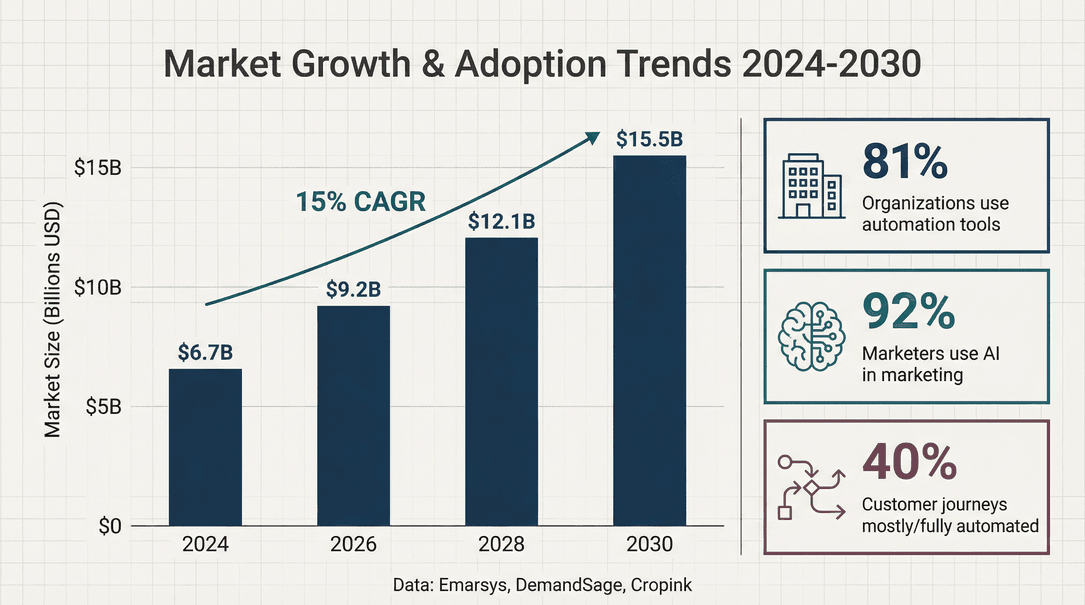
With 17% of organizations currently running pilots and 37% reporting adoption at scale, generative AI (Gen AI) stands apart as the most actively piloted technology in 2026. This indicates a shift from experimentation to operationalization as companies look for to harness Gen AI for material creation, client engagement and automation of intricate jobs.
Other technologies, such as big information analytics (33% enterprise-wide adoption), automation technologies (31%) and general AI (32%) are acquiring traction, supporting sophisticated analytics, process automation and data-driven decision-making. While interest in emerging innovations is growing, adoption remains measuredparticularly for augmented/virtual reality and blockchain, where 34% to 41% of companies report no strategies for implementation.
Not every organization finds instant worth in adopting them because their relevance and impact can differ substantially depending on sector requirements and company designs. For many, the decision to invest is driven by targeted chances rather than broad applicability, resulting in a more selective approach to development.